
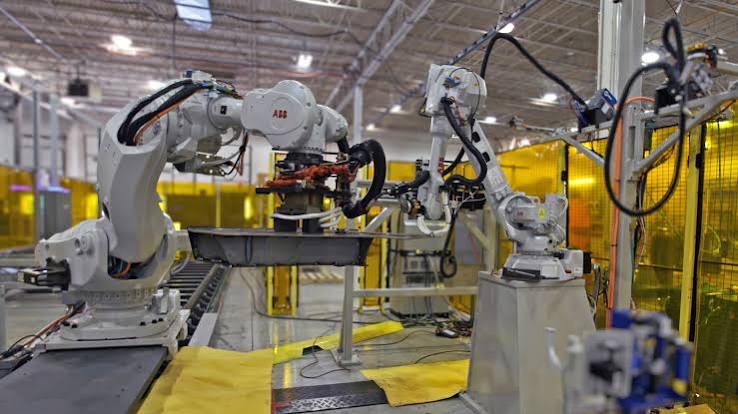
Transforming Manufacturing with Welding Line Automation
Manufacturing businesses face pressure to produce faster keep quality steady and manage costs. Welding is an operation in industries such as automotive, engineering, fabrication, construction equipment and industrial machinery. When welding is done manually at volumes keeping the same speed, accuracy and quality across production is difficult.
This is where welding line automation makes a difference. By combining welding equipment, automated fixtures, sensors, controllers and material‑handling systems manufacturers can build a smoother and more consistent production process.
Triz Automation System in Pune offers industrial automation solutions designed to help manufacturers improve production efficiency, cut manual work and build reliable automated welding processes.
What Is Welding Line Automation?
Welding line automation is the use of automated machinery and control systems to perform welding operations with manual intervention. Depending on the application an automated welding line can include arms, welding machines, conveyors, fixtures, sensors, positioning systems and PLC‑based control systems.
Why Is Welding Automation Important for Modern Manufacturing?
Traditional welding relies heavily on operator skill and physical effort. For production volumes this may work well. However when production increases repetitive welding can cause fatigue, inconsistent output and longer production cycles.
Automated welding systems help manufacturers overcome these challenges by controlling welding movements and process parameters. Once automated welding systems are properly programmed automated welding systems can repeat the operation across components.
This makes automation especially useful for businesses that want to increase production without compromising consistency.
Key Benefits of Welding Line Automation
- Higher Production Speed :- Automated welding equipment can perform welding operations continuously according to predefined cycles. This can cut delays and help manufacturers boost production output. For high‑volume manufacturing even small improvements, in cycle time can lead to productivity gains.
- Consistent Welding Quality :- One of the biggest advantages of welding automation systems is repeatability. Automated equipment follows programmed movements and welding parameters, helping maintain consistent results across multiple components. This can reduce variations caused by differences in manual welding techniques.
- Reduced Repetitive Manual Work :- Welding operators may need to perform the same task hundreds or thousands of times. Automation can take over suitable repetitive operations while employees focus on supervision, inspection, programming and other skilled activities. This creates a more efficient use of the workforce.
- Improved Workplace Safety :- Welding involves heat, sparks, fumes and repetitive physical movements. Automated systems can perform suitable welding operations within controlled work areas, reducing direct operator exposure to certain hazards. Safety equipment, protective enclosures, sensors and emergency systems can be integrated into the automation setup.
- Better Production Efficiency :- Automation connects different stages of the manufacturing process. Welding equipment can work together with fixtures, conveyors, sensors and control systems to create a coordinated workflow. This can help reduce production bottlenecks and improve overall process efficiency.
- Lower Production Waste :- Inconsistent welding can lead to parts, rework and wasted material. By keeping welding parameters in check automated systems help reduce differences and boost first‑time production quality. Better consistency can ultimately contribute to more efficient use of materials and resources.
- Easy Process Monitoring :- Modern industrial welding automation can include control panels and monitoring systems that provide information about equipment operation and production status. Operators can monitor system conditions, identify interruptions and respond to issues more efficiently.
- Scalable Production :- As business requirements grow, manufacturers may need to increase production capacity. Automated welding systems can provide a foundation for scaling production.
Automated Welding vs Manual Welding
| Feature | Manual Welding | Automated Welding |
|---|---|---|
| Production speed | Depends on operator | Consistent programmed cycle |
| Repeatability | Can vary | High repeatability |
| Operator involvement | High | Lower for repetitive tasks |
| Production monitoring | Often manual | Can be system-based |
| Repetitive work | Physically demanding | Suitable for automation |
| High-volume production | More challenging | Better suited |
| Process consistency | Depends on skill | Controlled parameters |
Automation does not necessarily replace skilled welders. Instead, it changes their role from performing repetitive welding tasks to managing, monitoring and improving the automated process.
Customized Welding Automation Solutions
Every manufacturing process is different. A standard automation system may not always meet a company's exact requirements.
A customized welding automation solution can be designed by considering:
- Component dimensions
- Material type
- Welding method
- Production volume
- Required cycle time
- Number of welding points
- Available floor space
- Existing machinery
- Future production requirements
Customized automation allows manufacturers to develop a system that fits their existing production environment instead of making major changes unnecessarily.
How Triz Automation System Supports Manufacturing
Triz Automation System in Pune provides automation solutions for industrial manufacturing requirements. The company focuses on developing practical automation systems based on specific production applications. From automated machinery and robotic systems to integrated production solutions, the right automation approach can help manufacturers improve productivity and process consistency.
For companies considering welding automation, understanding the existing production workflow is the first step. A suitable solution can then be planned around production targets, component requirements and operational challenges.
What Makes a Good Welding Automation Solution?
A successful automation project should not focus only on purchasing advanced equipment. The complete production process needs to be considered.
A good automated welding system should provide:
- Reliable operation
- Consistent welding quality
- Efficient production cycles
- Easy operation
- Proper safety features
- Simple maintenance
- Future scalability
- Effective technical support
The system should solve a genuine production challenge and provide measurable operational value.
Welding line automation changes manufacturing by speeding up production, making welding more consistent, raising safety and improving efficiency. From welding cells to integrated automated production lines, companies can choose solutions that fit their manufacturing needs.
Welding line automation brings productivity, less repetitive work, steady quality, clearer process monitoring and production that can grow. For manufacturers, welding line automation can be a useful purchase.
Triz Automation System, in Pune can help companies that want to set up custom industrial automation solutions according to their production needs. With planning, technology and system integration, companies can shift to a welding process that is more efficient, reliable and productive. I have seen companies benefit from this approach.